
The Indian economy is projected to grow at 6.2 per cent in 2025-26, slower than earlier estimated rate of 6.5 per cent, due to escalated trade tensions and global uncertainty, the International Monetary Fund (IMF) said on Tuesday. "For India, the growth outlook is relatively more stable at 6.2 per cent in 2025, supported by private consumption, particularly in rural areas," IMF said in its World Economic Outlook (WEO).

India's economic growth slowed to 7.4 per cent in the March quarter, bringing down the annual growth rate to 6.5 per cent during 2024-25, according to official data released on Friday. The growth in the January-March period was lower than the 8.4 per cent expansion in the year-ago quarter.

In a move that could have implications for market share dynamics, the Securities and Exchange Board of India (Sebi) has permitted the National Stock Exchange (NSE) and the BSE to alter the days for settlement of equity derivatives contracts.

'The government is actively engaging with EU to ensure that concerns of Indian companies and hard-to-abate sectors are adequately addressed under CBAM'

The surge in the market price is also attributed to demand by retail and high-networth individual investors ahead of the IPO.

India's economic growth forecast for 2025 has been revised downward to 6.3 per cent, and despite a projected moderation, the country remains one of the fastest-growing large economies, supported by resilient consumption and government spending, the United Nations has said.

The point to note for India is that we must not panic. The United States may be our largest export destination, but high tariffs will not exactly mean gloom and doom. Sure, we can throw some morsels as we continue negotiating, but we must be firm that some red lines cannot be crossed, no matter what, asserts Shreekant Sambrani.

India's purchase of US crude oil has picked up in 2025 and could easily double their previous levels, government officials said on Wednesday. The surge comes in the wake of the then-incoming Donald Trump administration's announcement that it would consider hiking tariffs on a reciprocal basis, and pushed some countries, especially those with large trade surpluses with the US, to buy more of its energy.

India's economic growth rate decelerated to 6.2 per cent in the October-December quarter this fiscal, mainly due to poor performance by mining, manufacturing and all other sectors, with the exception of agriculture. However, on a sequential basis, the economic growth rate in the third quarter showed improvement over 5.6 per cent recorded in the second quarter.
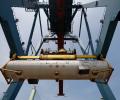
Chinese import tariffs have unwittingly come to India's assistance to help boost imports of US liquefied petroleum gas (LPG) at rates cheaper than what it pays for supplies from West Asia, according to industry sources and shipping data.

A year after a Hamas attack against Israel on October 7 and the ensuing Israeli invasion of the Gaza Strip, India's trade with most West Asian countries has largely escaped any major disruption, except with countries like Israel, Lebanon, and Jordan. However, repeated flare-ups of geopolitical tensions in the region continue to drive up shipping and logistics costs.

If Beijing succeeds in this multipronged effort to challenge the current dominant power, it will have not just economic but political and security consequences. There is no let-up in the South China Sea nor any de-escalation moves on the India-China border. This portends to ominous signalling from Beijing, observes China expert Srikanth Kondapalli.
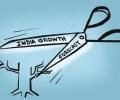
The Indian economy is estimated to grow at 7 per cent in the 2022-23 fiscal, down from 8.7 per cent a year ago, mainly due poor performance of mining and manufacturing sectors. As per the first advance estimates of national income released by the National Statistical Office (NSO) on Friday, the manufacturing sector output is estimated to decelerate to 1.6 per cent in the current fiscal from 9.9 per cent in 2021-22. Similarly, mining sector growth is estimated at 2.4 per cent in the current fiscal as against 11.5 per cent in 2021-22.

India's economic growth rate is estimated to slip to a four-year low of 6.4 per cent in 2024-25, mainly on account of poor showing by the manufacturing and services sector, according to government data released on Tuesday. The gross domestic product (GDP) rate of 6.4 per cent will be the lowest since the Covid year (2020-21) when the country witnessed a negative growth of 5.8 per cent.

Around 74 per cent rural households expect their incomes to increase in the next one year, according to a bimonthly survey conducted by the National Bank for Agriculture and Rural Development (Nabard) in May 2025. The percentage recorded was 72 in March.

Unless something changes, Mr Trump is a huge threat right now, which is perhaps not being recognised fully, cautions Debashis Basu.
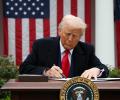
On India, the chart showed that the country charged 52 per cent tariffs on the US "including currency manipulation and trade barriers," and America will now charge India "discounted reciprocal tariffs" of 26 per cent.

Indian refiners are likely to import 2-2.2 million barrels per day of Russian crude oil in June - the highest in the last two years and more than the total volumes bought from Iraq, Saudi Arabia, the UAE and Kuwait, preliminary data by global trade analytics firm Kpler showed.

Acutely conscious that he's left with less than four years to create his legacy, Trump is undoubtedly a man in a hurry, observes Ambassador M K Bhadrakumar.

"These latest so-called 'Liberation Day' tariffs are reckless and self-destructive, inflicting financial pain on Illinois at a time when people are already struggling to keep their small businesses afloat and put food on the table."

Just as Gandhiji's spinning wheel became a symbol of resistance, Indian travellers today can turn their passports into instruments of peaceful protest, argues Harsh Roongta.

The "weaponisation" of economic activity - through tariffs and sanctions - is now a reality, with countries leveraging these tools strategically, External Affairs Minister S Jaishankar said at the Raisina Dialogue recently.

'Only those who live through these situations understand the true cost of war.'

US strikes on Iran's three main nuclear facilities have once again raised concerns that Tehran might shut down the Strait of Hormuz - one of the world's most critical chokepoints, through which a fifth of global oil and gas supply flows.

Trump has made it clear to Prime Minister Modi that India will not be spared from Washington's reciprocal tariffs and emphasised that "nobody can argue with me" on tariff structure.

'...the auto industry to get back to 7% to 8% annual growth.' 'High growth in the SUV segment alone will not achieve this, as it is a small market.'

India's trade ties with Israel have only strengthened in the years after 2019. The total value of trade rose to $10.5 billion on a rolling four-quarter basis in June 2023 from $5.5 billion in the same month in 2019, shows a Business Standard analysis of data from the Centre for Monitoring Indian Economy (CMIE). A rolling four-quarter number provides a comparable figure across different time periods.

The Ministry of Statistics and Programme Implementation (MoSPI) on Friday said it has advanced the release of macroeconomic data Gross Domestic Product (GDP) estimates by about 90 mins to 4 pm. As per the current practice, the press releases of GDP are scheduled at 5.30 pm on the specified release dates, a MoSPI statement said.

The government's initiative to migrate SEZ data from NSDL software to ICEGATE system for streamlined reporting of import data caused double counting of gold imports, resulting in inflated figures and the issue has now been largely rectified, government sources said. The downward revision has provided the actual picture of trade deficit (difference between imports and exports), which was earlier looking very high. The deficit for November will now be revised downwards from $37.84 billion to about $32.8 billion. Similarly, there will be a revision in overall import numbers as well.

The government has revised gold import data, bringing down numbers for November by $5 billion to $9.84 billion, possibly to rectify double accounting of inbound shipments. According to revised data of the commerce ministry arm Directorate General of Commercial Intelligence and Statistics (DGCIS), gold import numbers have been slashed since April 2024, revealing excess imports of about $11.7 billion during the first eight months of 2024-25.

Indian drugmakers supply 47 per cent of the generic medicine requirements in the US, and tariffs would have increased prices in the US domestic market for patients, who are already dealing with drug shortages.

The central government's Great Nicobar development project, proposed around an unprecedented transhipment port, will be executed to keep environmental impact minimal, and is essential as it is of national importance, the government has said amid calls to abort the controversial project due to ecological concerns, the Centre said in an official statement.
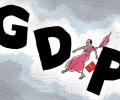
The upcoming Union Budget to be presented on February 1 is likely to assume a nominal gross domestic product (GDP) growth between 10 and 10.5 per cent for FY26, a Business Standard poll of 10 economists showed. The first advance estimates released by the National Statistics Office (NSO) had estimated a nominal GDP growth of 9.7 per cent for FY25. Nominal GDP, calculated at current market prices, factors in the effect of inflation. It is used as the base to calculate crucial macroeconomic indicators, such as fiscal deficit, revenue deficit, and debt-to-GDP ratio.

After declining to a three-year low in FY24, the private sector investment is expected to fall further in the current financial year, India Ratings said in a research note.. The investments in the private sector are likely to plummet to below 11 per cent of the GDP in FY25, based on the trends from the latest national accounts data and company fillings, it noted.

Retail inflation dipped marginally to a nearly six-year low of 3.34 per cent in March due to a decline in prices of vegetables and protein-rich items. The Consumer Price Index (CPI) based inflation was 3.61 per cent in February and 4.85 per cent in March last year.

'Balancing tunnel developments with ecological realities is a major challenge and, when overlooked, can contribute to mishaps.'

Apple's ambitious strategy to expand iPhone exports, shift more production from China to India at a faster pace, and grow its domestic market hits a Trump-sized roadblock.

Recent documents by NITI Aayog and periodic labour force surveys on employment show that the importance of agriculture is rising in the Indian economy.

With Donald Trump all set to become US president, Indian exporters may face high customs duties for goods like automobiles, textiles and pharmaceuticals if the new US administration decides to pursue the 'America First' agenda, opined trade experts. Experts also said that Trump could also tighten H-1B visa rules, impacting costs and growth for Indian IT firms. Over 80 per cent of India's IT export earnings come from the US, making it vulnerable to changes in visa policies.

The 16th Brics Summit beginning Tuesday in Kazan, Russia, is expected to see more focus on creating a sharper energy policy for Brics that ensures closer partnership among members in both energy security and energy transition, official sources said. The same is expected to be a part of the Kazan declaration, currently being negotiated, they added.
